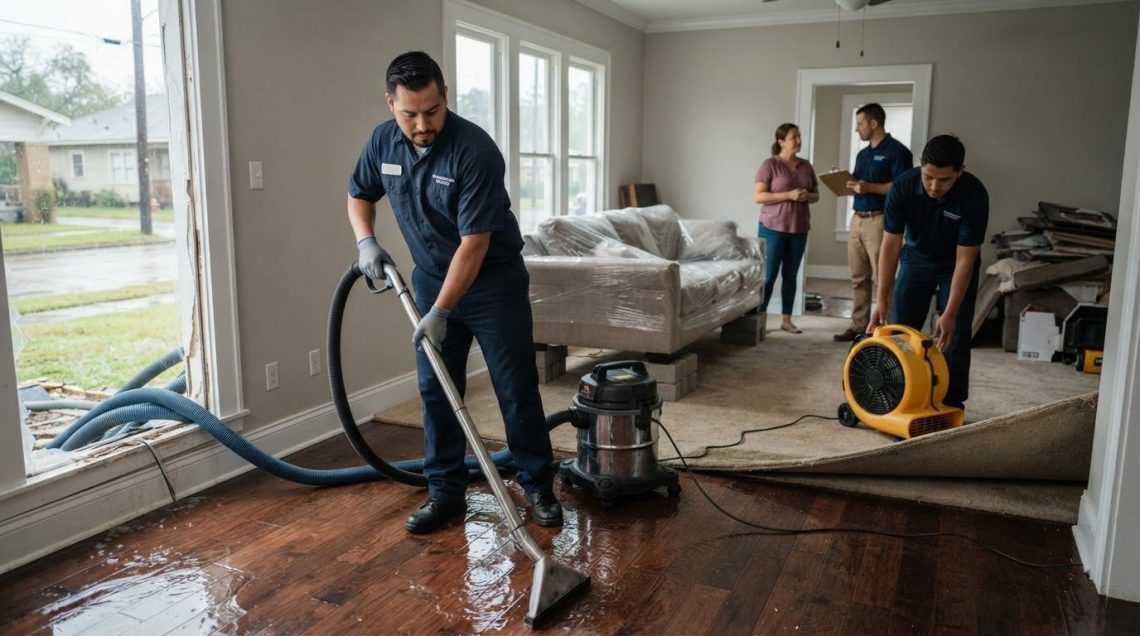
A burst pipe, failed water heater, or storm-driven leak can turn a manageable maintenance issue into a major property loss within hours. In Lafayette, heavy rain, tropical weather, humidity, and occasional freezing temperatures can all contribute to urgent water emergencies.
Emergency Water Removal means more than pumping visible water from a room. It involves identifying the source, determining contamination, extracting water, drying building materials, and documenting conditions before secondary damage develops.
The safest first step is to control the source if you can do so without entering danger. A restoration provider such as Restoration Logistics Lafayette can help evaluate both obvious and concealed moisture while you protect occupants and preserve property records.
Act Safely Before Water Removal Begins
Stop the water at the shutoff valve when the valve is accessible and the surrounding area is safe. For a plumbing failure, this may mean closing the fixture valve or the main supply. Never enter standing water near electrical outlets, appliances, extension cords, or damaged wiring. Contact the electric utility or a qualified electrician if electrical hazards are suspected.
Evacuate immediately when conditions include:
- Sewage or wastewater contamination.
- Rapidly rising floodwater.
- A sagging ceiling, shifting wall, damaged foundation, or other structural instability.
- Fire damage, chemical contamination, or a strong gas odor.
- Electrical equipment or wiring submerged in water.
If it is safe, move documents, electronics, furniture, and other valuables to a dry location. Do not carry items through contaminated water or risk injury to save possessions. Avoid household vacuums, standard shop vacuums not rated for the conditions, and any electrical equipment used in wet areas. Do not disturb sewage-soaked drywall, insulation, carpet, or porous contents; handling can spread contaminants.
Identify the Type and Extent of the Water Emergency
Lafayette properties commonly experience water losses from burst or frozen pipes, washing-machine and dishwasher failures, water-heater leaks, overflowing toilets or tubs, roof damage, storm intrusion, and basement or crawl-space flooding. The source may be upstairs while the most severe damage appears below, because water follows framing cavities, plumbing penetrations, flooring systems, and gravity.
Professionals classify water by likely contamination:
- Category 1, or clean water: Supply-line breaks or some rainwater before contact with contaminants.
- Category 2, or gray water: Water containing chemical, biological, or physical contamination, such as an appliance discharge or overflow from a washing machine.
- Category 3, or black water: Sewage, floodwater, rising groundwater, or heavily contaminated water requiring specialized containment and personal protective equipment.
Classification can change as water remains stagnant or contacts building materials. It determines cleaning methods, demolition decisions, worker protection, and whether some contents can be salvaged.
Assessment should cover affected rooms and adjacent areas, including carpet padding, hardwood, cabinets, drywall, insulation, subfloors, framing, crawl spaces, attics, and HVAC-adjacent spaces. Moisture meters help measure materials such as wood and drywall. Thermal imaging can reveal temperature patterns associated with concealed moisture, although infrared findings should be confirmed with moisture readings. Visual inspection remains essential because neither technology identifies every condition.
What Emergency Water Removal Includes
Emergency removal is the first stage of mitigation, not automatically a complete repair. A typical workflow includes:
- Confirming that the source is stopped and the property is safe to enter.
- Inspecting and mapping moisture migration.
- Extracting standing water with submersible pumps, truck-mounted systems, portable extractors, and specialty tools.
- Removing unsalvageable carpet pad, drywall, insulation, or other materials.
- Moving, protecting, photographing, or packing out furniture and personal belongings.
- Cleaning, sanitizing, and deodorizing areas affected by gray or black water.
- Installing commercial air movers and dehumidifiers.
- Recording moisture readings and adjusting equipment as drying progresses.
Extraction removes free water. Mitigation limits additional loss through extraction, containment, cleaning, and temporary protective measures. Structural drying reduces moisture in materials and indoor air to appropriate levels. Restoration or reconstruction replaces finishes and damaged components, such as drywall, flooring, cabinetry, trim, and insulation.
Commercial equipment is designed to control airflow, humidity, and evaporation. Air movers accelerate evaporation from wet surfaces, while refrigerant or desiccant dehumidifiers remove moisture from the air. Technicians should monitor conditions rather than simply leave equipment running; excessive airflow without humidity control can move moisture into other parts of a building.
Rapid extraction helps limit wood swelling, floor delamination, staining, drywall deterioration, corrosion, and conditions favorable to microbial growth. Industry technicians may follow IICRC S500 principles for professional water-damage restoration and use appropriate OSHA safety practices, particularly during demolition or sewage cleanup.
Lafayette Property Concerns After Extraction
Visible water can disappear while moisture remains trapped in:
- Carpet backing and padding.
- Hardwood flooring and floor assemblies.
- Wall cavities and insulation.
- Cabinets and toe kicks.
- Crawl spaces and subfloors.
- Attic insulation and roof-adjacent materials.
A surface may feel dry because evaporation has occurred at the top layer while the interior remains wet. This is why technicians compare readings with unaffected areas and document drying over time. In humid Lafayette conditions, dehumidification is especially important because outdoor air may not provide effective drying.
Incomplete drying can produce musty odors, microbial contamination, swelling, delamination, corrosion, and progressive deterioration. Mold is not the only concern: wet gypsum, wood framing, adhesives, and insulation can lose performance even before visible growth appears.
Homes and rental properties may require occupant protection, contents handling, and coordination with owners or property managers. Offices, retail buildings, restaurants, and other commercial spaces also require attention to business interruption, inventory, customer safety, electrical systems, and HVAC operation.
Sewage losses may require controlled demolition and professional cleaning. Repeated seepage can indicate drainage, grading, foundation, or plumbing problems that extraction alone will not resolve. If structural materials are compromised, reconstruction may follow mitigation.
Keep a file containing:
- Photographs and video taken before cleanup, when safe.
- The suspected source and time discovered.
- Moisture readings and affected-room diagrams.
- Lists of damaged contents and materials.
- Equipment placement, drying records, invoices, and work authorizations.
This documentation supports property records and may help an insurance claim.
Emergency Water Removal Questions for Property Owners
How quickly should water be removed?
Immediately—ideally as soon as the source is controlled and the area is safe. Water can migrate through flooring and wall systems rapidly, increasing extraction difficulty and drying time. Contact a restoration professional early, even if the visible amount appears limited.
What is the fastest way to remove basement water?
A sump pump may handle clean, shallow water when electricity and access are unquestionably safe. A properly rated wet vacuum can address small amounts of clean water, but it is not a solution for sewage or extensive flooding. Professional extraction equipment is faster for large volumes and can be paired with moisture mapping and structural drying.
Never enter a flooded basement to operate electrical equipment. If water is contaminated, rising, or near electrical systems, leave the area and request professional assistance.
How much does emergency water remediation cost?
Costs vary substantially. As a broad U.S. planning range, small clean-water extraction jobs may cost roughly $500 to $1,500, while moderate mitigation commonly ranges from $1,500 to $5,000 or more. Extensive black-water losses, demolition, contents pack-out, prolonged drying, and reconstruction can exceed $10,000.
Major cost variables include:
- Water category and required protective measures.
- Affected square footage and number of levels.
- Extraction difficulty and equipment duration.
- Flooring, drywall, insulation, or cabinetry removal.
- Contents handling and storage.
- Cleaning, odor control, and reconstruction.
These figures are planning estimates, not a quote. A written scope should separate mitigation from repairs.
Does homeowners insurance cover water removal?
Coverage depends on the cause of loss and the policy. Sudden, accidental plumbing failures may be treated differently from floodwater, gradual seepage, repeated leakage, wear, or deferred maintenance. Standard homeowners policies commonly exclude flooding from rising external water; separate flood insurance may apply.
Document conditions before discarding materials when safe, prevent further damage without creating hazards, and notify the insurer promptly. Ask which emergency measures are authorized and retain receipts, photographs, reports, and communications.
When is professional help necessary?
Call a qualified restoration professional for large-scale flooding, sewage or gray-water contamination, hidden moisture, repeated seepage, wet structural materials, crawl-space or attic damage, or any situation you cannot safely access and dry. Professional help is also prudent when water has reached electrical systems, HVAC components, multiple rooms, or a commercial operation.
The objective is not merely to make the floor look dry. It is to verify that the building, contents, and indoor environment have been assessed, cleaned, and dried sufficiently to prevent avoidable damage.

