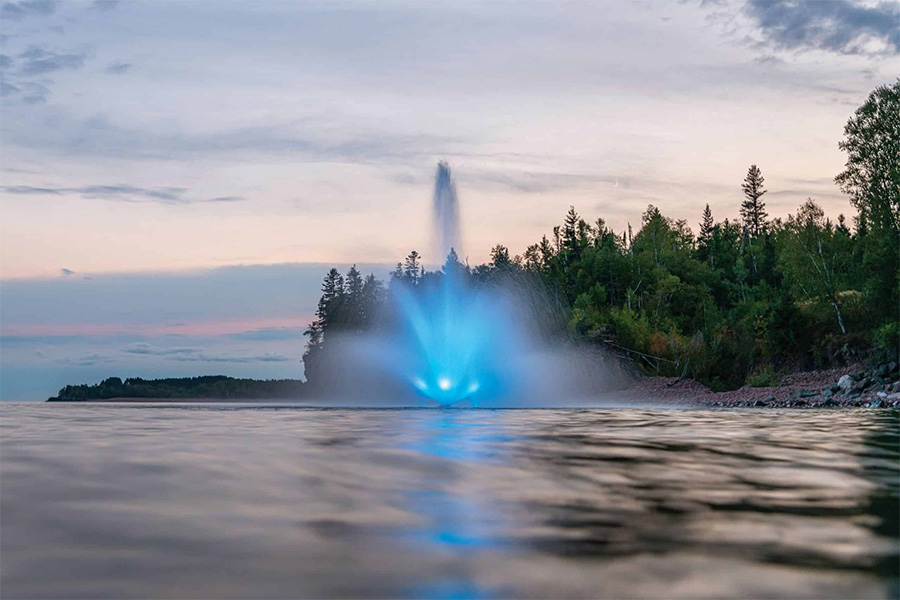
Garden ponds and water features transform into magical nighttime displays when water movement and illumination work together. The relationship between flow dynamics and light placement determines whether your feature creates mesmerizing visual effects or disappointing results. Many pond owners overlook this critical connection, ending up with washed-out lighting or missed opportunities for dramatic shadow play and sparkle.
The Science of Motion and Illumination
Water Height and Movement Characteristics: A fountain pump 3 ft lift creates distinct flow patterns that directly influence how light behaves around your water feature. The pump’s vertical thrust produces turbulence zones, smooth flow areas, and splash patterns that each interact differently with positioned lights. Higher lifts generate more dramatic water columns with increased air mixing, creating opportunities for light to catch spray particles and produce sparkle effects.
Strategic Light Positioning for Maximum Impact: Fountain lights positioned at specific angles relative to water flow determine the visual outcome you want to achieve. Placing lights directly beneath upward jets creates dramatic backlighting but can wash out finer details. Angled placement at 30 to 45 degrees from the water column allows light to graze across moving water surfaces, highlighting textures and creating dancing shadow patterns on surrounding surfaces. LED lights also have built-in angles to their displays. For example, LED lights might have 30-degree illumination, 45-degree illumination, etc.
Sculpting Atmosphere with Beam Angles
Creating Sparkle and Shimmer: Light positioned to intersect turbulent zones produces maximum sparkle as beams catch individual water droplets. The intersection point between lamp beam and water spray becomes critical. Positioning submersible lighting too far from the action point reduces sparkle intensity, but too close creates harsh glare rather than delicate shimmer effects.
Shadow Play and Depth Creation: Angled illumination from multiple points creates depth perception through layered shadows. Single-point lighting flattens visual interest, but two or three lights positioned around the fountain at varying distances produce overlapping shadow patterns. This approach works particularly well with tiered fountains where water cascades create natural screening effects between light sources.
Synchronizing Output and Velocity
Balancing Brightness With Movement Speed: Fast-moving water from high-capacity pumps requires brighter illumination to remain visible, but excessive brightness overwhelms slower flows. Consider your pump discharge rate when selecting light wattage. Gentle flows display better with softer, warmer lights that allow water movement to remain the focal point rather than competing with harsh illumination.
Adjusting for Seasonal and Environmental Changes: Water clarity affects light penetration and visual effects throughout the year. Spring algae blooms diffuse light differently than crystal-clear winter water. Plan light positioning with adjustment capability, allowing seasonal modifications without complete reinstallation. Mounting brackets with pivoting options provide flexibility as water conditions and plant growth change your feature’s characteristics.
Implementation Strategies for Success
Distance and Angle Recommendations: Position lights at these intervals for balanced effects:
- Uplight placement: 6 to 12 inches from fountain base
- Cross-lighting: 18 to 24 inches at 45-degree angles
- Accent lights: 36 to 48 inches for peripheral shadow creation
- Avoid direct eye-level positioning that creates glare
Testing and Fine-Tuning Your Setup: These measurements work for most residential fountain installations but require adjustment based on your specific pump output and desired visual intensity. Start with basic positioning, then experiment by moving lights incrementally until you find the sweet spot. Water features respond differently to lighting changes, so what works perfectly for one setup might need tweaking for another.
Bringing Your Vision to Life
Mastering the relationship between water flow dynamics and light placement transforms ordinary pond fountains into captivating nighttime displays. Position lights strategically relative to your pump’s flow patterns, adjust angles to capture desired effects, and remain flexible for seasonal changes. Start with basic positioning guidelines, then fine-tune based on what looks best in your specific setup. Your pond deserves lighting that showcases water movement rather than fighting against it.
Featured Image Source: https://www.fountaintechpumps.com/wp-content/uploads/2025/05/RGBWLEDblue-scaled.jpg


