Every industrial operation runs on specific parameters. Temperature swings, pressure spikes, and constant vibration create unique demands on your fluid transfer systems. Ignoring these factors when selecting hose assemblies and couplings leads to premature failures, costly downtime, and potential safety hazards. The right pairing between crimping precision and coupling design protects your operation from hidden risks that manifest only after installation.
When Application Demands Dictate Equipment Choices
Critical Operating Parameters Define Success: Your application environment sets non-negotiable requirements. A Finn Power crimping machine with the correct die set creates uniform compression around the hose ferrule, maintaining structural integrity under peak loads. Temperature extremes alter material properties, pressure cycles test seal reliability, and vibration loosens inadequate connections. Missing even one parameter during specification leads to field failures that could have been prevented with proper upfront analysis.
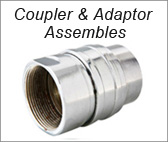
Coupling Selection Impacts System Safety: Downstream from the crimped assembly, your quick release coupling must match the same operating envelope. A coupling rated for 10 bar fails catastrophically at 15 bar, regardless of how well the hose was crimped. Material compatibility matters too. Chemical exposure degrades certain seal compounds, creating leak paths that compromise both safety and efficiency in production environments.
Die Sets and Programs Optimise Assembly Integrity
Precision Crimping Prevents Premature Failure: The relationship between die diameter and ferrule compression determines how long your assembly survives. Hydraulic system pressure ratings depend on achieving manufacturer-specified crimp dimensions. Too loose and the hose blows off under load. Too tight and you damage the hose reinforcement, creating weak points that fail unpredictably. Modern crimping machines store programs for different hose-coupling combinations, removing guesswork from the process.
Program Selection Matches Assembly Specifications: Each hose construction requires specific crimp force and die geometry. Consider these critical factors when programming your equipment:
- Die set compatibility: Match die size to ferrule outer diameter within 0.1mm tolerance
- Crimp force calibration: Verify tonnage settings against manufacturer specifications before each production run
- Quality verification: Measure crimped diameter at multiple points to confirm uniform compression across the ferrule length
Material Properties Guide Coupling Decisions: Brass couplings suit general industrial applications but fail in corrosive environments. Stainless steel handles chemical exposure but costs three times more. Thread standards like BSP or NPT must match your existing infrastructure. A mismatch here creates cross-threading damage during installation, leading to leaks that appear immediately or develop gradually as vibration loosens improperly seated connections.
Building Your Selection Framework for Technical Reliability
Match Specifications to Actual Operating Conditions: Start by documenting your worst-case operating scenario. Peak pressure, maximum temperature, and vibration frequency define your minimum equipment ratings. Add a safety margin of 25% above these values. This buffer accounts for pressure spikes during startup, temperature variations across seasons, and equipment degradation over time. Purchasing to exact specifications leaves no room for real-world operating conditions.
Verify Compatibility Across the Assembly Chain: The weakest link determines system performance. Your crimped hose assembly might handle 250 bar, but if the coupling rates at 150 bar, that becomes your effective maximum. Check material compatibility between hose inner tube, coupling body, and seal compounds. Chemical resistance charts prevent expensive mistakes when transferring aggressive fluids through your system.
Equipping Your Operation for Long-Term Performance
Matching crimping precision to coupling capabilities protects your investment and operational safety. Technical buyers who specify equipment based on documented application demands reduce failure rates and extend service intervals. Review your current hose assemblies against actual operating conditions. Contact suppliers for detailed specification sheets and compatibility guidance before your next purchase order.
Featured Image Source: https://www.jreltd.com/images/quick-coupling/6.jpg


